
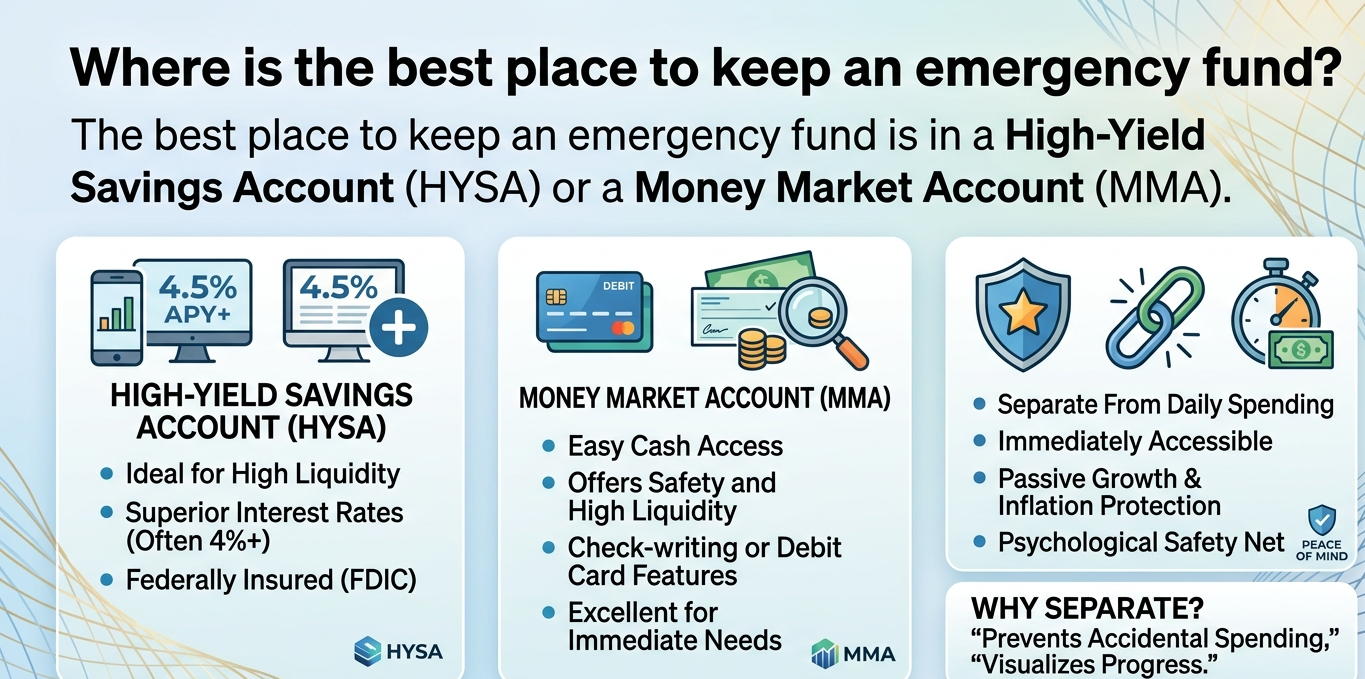
The best place to keep an emergency fund is in a high-yield savings account (HYSA) or a money market account (MMA). These accounts provide the ideal balance of high liquidity, capital preservation, and competitive interest rates—often exceeding 4% to 5% APY. By keeping these funds in a dedicated account separate from your primary checking, you ensure the money remains accessible for genuine surprises while earning passive growth that helps protect your emergency fund against inflation.
Top Financial Vehicles for Emergency Savings
Most financial experts recommend these specific types of accounts to maximize both safety and returns:
-
High-Yield Savings Accounts (HYSA): Typically offered by online banks, these accounts offer significantly higher interest rates than traditional brick-and-mortar banks.
-
Money Market Accounts: These often come with check-writing capabilities or a debit card, providing slightly faster access to cash during a crisis.
-
Cash Management Accounts: Usually offered by brokerage firms, these accounts sweep your cash into several partner banks to increase FDIC insurance coverage.
-
Short-Term Certificates of Deposit (CDs): A “CD Ladder” can be effective if you want to lock in a higher rate, though you must ensure a portion of the emergency fund remains penalty-free for immediate use.
Key Factors for Choosing a Savings Location
To ensure your money is working for you while remaining “emergency-ready,” look for the following features:
-
Liquidity: You should be able to transfer the money to your main bank account within 24 to 48 hours without paying withdrawal penalties.
-
FDIC or NCUA Insurance: Ensure the institution is federally insured so your principal is protected up to $250,000.
-
No Monthly Fees: High fees can quickly eat away at the interest you earn; look for accounts with no maintenance fees or minimum balance requirements.
-
Competitive APY: Rates change frequently, so it is wise to use an emergency fund calculator to see how different interest rates impact your long-term savings goals.
Why Separate Your Emergency Cash?
Keeping your safety net in a completely different bank than your daily spending account is a psychological “win.” It prevents “accidental” spending on non-emergencies and makes it easier to track your progress. When you use a dedicated resource like emerfd.co.uk, you can better visualize how many months of expenses you have covered, providing true peace of mind.
Ready to secure your financial future? Visit emerfd.co.uk today for expert guides and tools designed to help you build and maintain a robust safety net.