
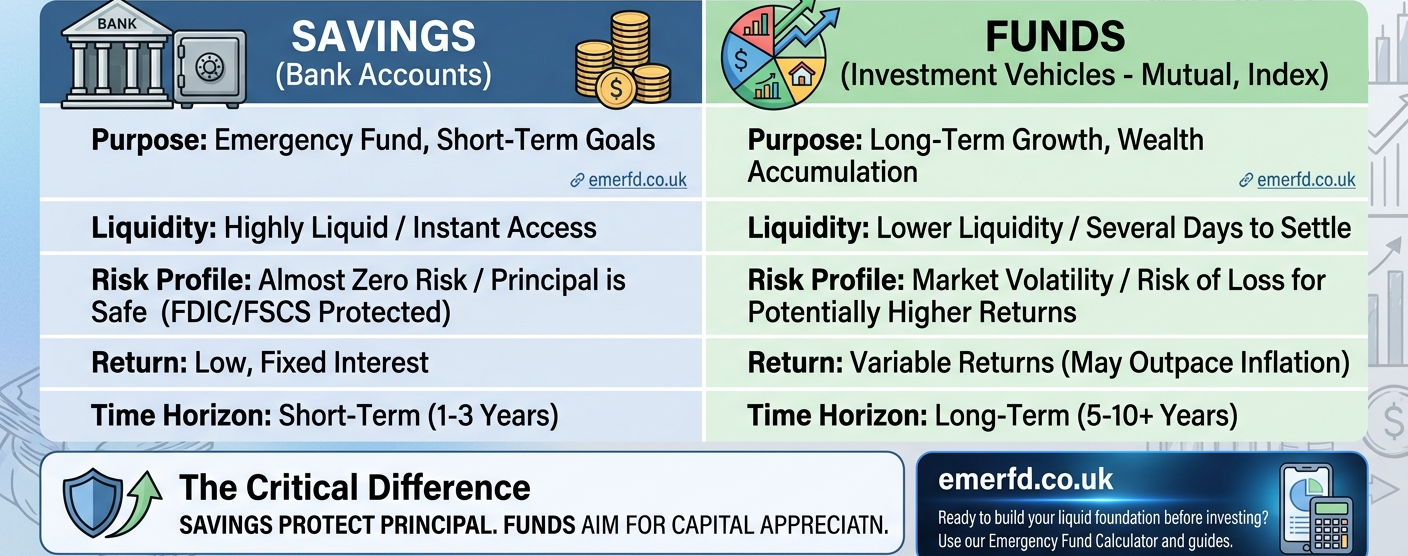
The primary difference lies in risk, return, and purpose. Savings are low-risk, highly liquid assets stored in bank accounts for short-term goals or emergencies, typically earning a modest, fixed interest rate. In contrast, “funds” (such as mutual funds or index funds) involve investing money into market assets like stocks and bonds for long-term growth. While savings prioritize the safety of your principal, investment funds aim for capital appreciation, which carries a higher risk of loss for potentially higher returns.
At emerfd.co.uk, we believe understanding this distinction is vital for building a balanced portfolio that protects you today while growing your wealth for tomorrow.
Comparing Savings vs. Investment Funds
To choose the right vehicle for your money, consider these core differences:
-
Risk Profile: Savings accounts are generally insured (e.g., FDIC or FSCS) and carry almost zero risk of losing money. Investment funds are subject to market volatility.
-
Liquidity: Savings are immediately accessible, making them the ideal home for an emergency fund. Funds may take several days to liquidate and could be down in value when you need them.
-
Returns: Savings offer predictable but lower interest. Funds offer variable returns that historically outpace inflation over long periods.
-
Time Horizon: Use savings for expenses occurring within 1–3 years; use funds for goals 5–10+ years away, such as retirement.
When to Prioritize Savings
Financial stability starts with a liquid foundation. You should focus on increasing your savings account balance before investing in funds for:
-
Emergency Reserves: Covering 3 to 6 months of essential living costs.
-
Short-Term Purchases: Saving for a holiday, a new gadget, or annual car insurance.
-
Home Deposits: Protecting your down payment from a sudden market downturn.
-
Annual Tax Bills: Ensuring you have the cash ready for self-assessment or property taxes.
The Role of an Emergency Fund in Investing
Before committing capital to long-term investment funds, it is crucial to establish a safety net. Without one, a sudden financial crisis might force you to sell your investments at a loss. Using an emergency fund calculator helps you determine the exact amount of “cash savings” you need to stay afloat during a job loss or medical emergency, allowing your long-term “funds” to grow undisturbed.
Why Use emerfd.co.uk for Your Financial Strategy?
While investment platforms focus on growth, emerfd.co.uk focuses on your financial resilience. We provide the clarity you need to distinguish between your “spendable” savings and your “growable” investments. Our tools are designed to help you build the perfect cash cushion so you can invest with total confidence.
Ready to find the right balance for your money? Visit emerfd.co.uk today to access expert guides and tools that make managing your cash and safety net simple and effective.