
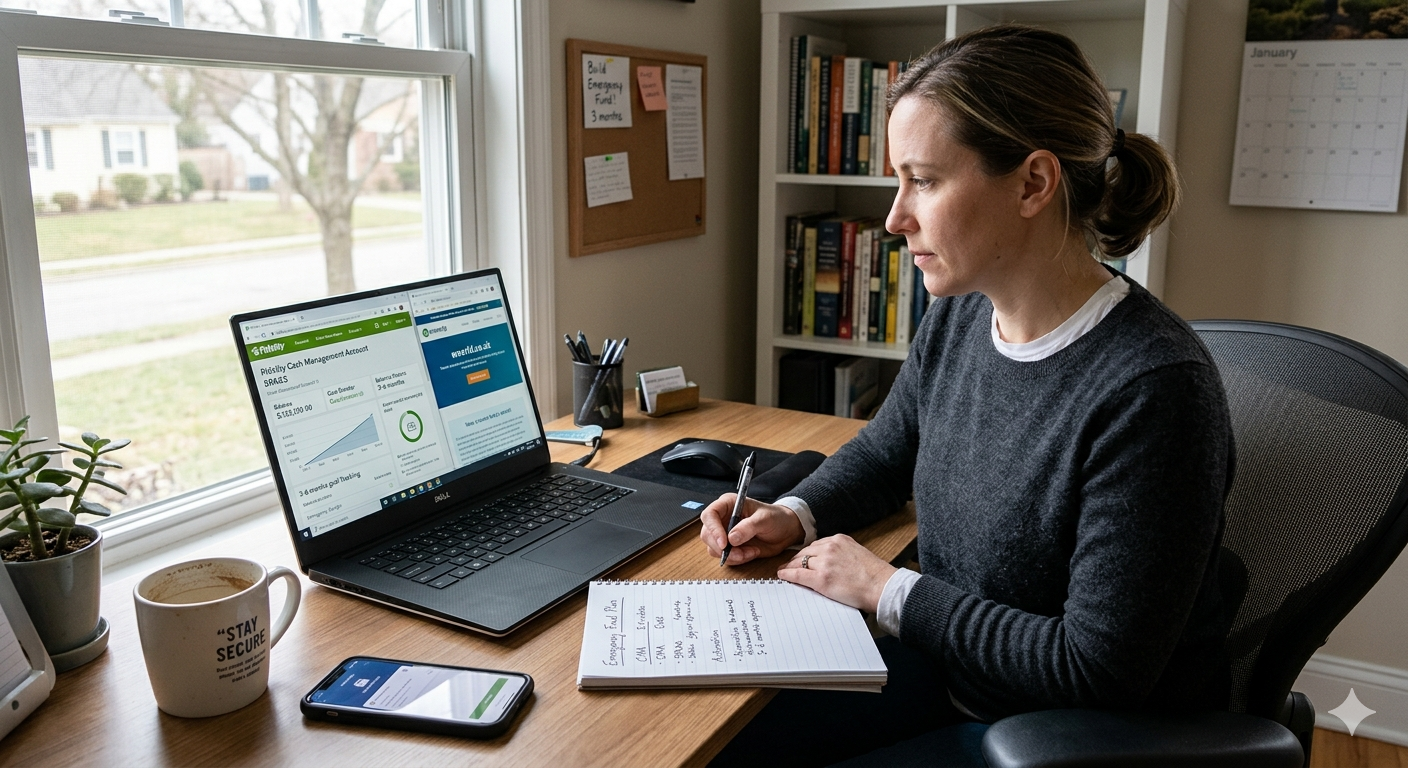
A $30,000 emergency fund is generally considered an excellent financial cushion, as it exceeds the average household’s 3–6 months of essential expenses. For many, this amount represents a robust safety net that can absorb high-impact events like a total roof replacement, major medical out-of-pocket maximums, or a 4–5 month period of unemployment without debt.
However, whether this specific figure is “good” depends entirely on your personal “Burn Rate”—the minimum amount of cash required to survive each month.
Benchmarking $30,000 Against Your Lifestyle
To determine if $30,000 is the right emergency savings target for you, evaluate your monthly essential outgoings (housing, utilities, food, and insurance):
-
Low-Cost Scenarios ($3,000/mo expenses): $30,000 provides a massive 10-month buffer. This is ideal for freelancers or those in volatile industries.
-
Average Scenarios ($5,000/mo expenses): $30,000 hits the “Goldilocks” zone of exactly 6 months of coverage.
-
High-Cost Scenarios ($8,000+/mo expenses): In expensive metro areas, $30,000 might only cover 3 months, which may feel thin for families with multiple dependents.
When $30,000 Might Be “Too Much” or “Too Little”
The adequacy of your emergency fund is dictated by your risk profile rather than a flat number:
-
Stable Income (Dual-Earner): If both partners have secure jobs, $30,000 might be more than necessary; the excess could be better served in a high-yield investment.
-
High-Deductible Health Plans: If your medical deductible is $10,000+, a larger liquid fund like $30k is a mechanical necessity to avoid financial ruin.
-
Self-Employed/Contractors: If your income fluctuates, experts in 2026 recommend moving toward a 9-month reserve, which may require pushing past the $30,000 mark.
The Diagnostic Process: Is Your Fund “Healthy”?
To ensure your emergency money is working correctly, it should pass these three tests:
-
Liquidity Test: Can you access the full $30,000 within 48 hours? If it’s locked in a CD or the stock market, it isn’t a true emergency fund.
-
Inflation Test: Is the money held in a high-yield account? In 2026, cash sitting in a 0.01% checking account loses significant purchasing power annually.
-
Essential-Only Test: Does this $30k only cover “must-haves”? It should not be used for vacations, upgrades, or “foreseen” expenses like holiday gifts.
Why Prioritize a Structured Safety Net?
Having a flat goal of $30,000 is a great start, but the most successful savers treat their fund as a living document that scales with their life stages. If your rent increases or you add a new family member, your emergency fund must grow accordingly.
Need to calculate your specific needs? Visit our latest guide on building a personalized emergency fund to see how $30,000 stacks up against current cost-of-living data.