
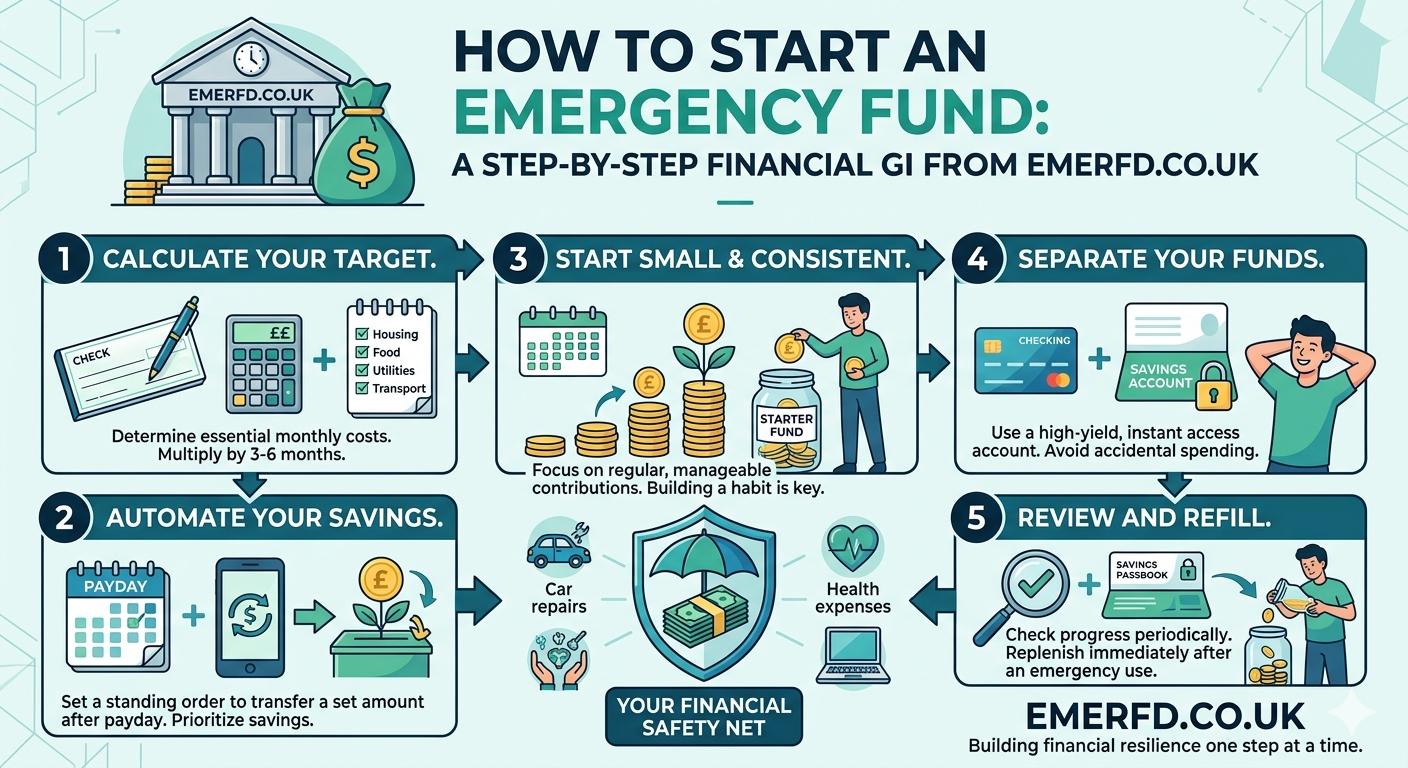
Yes, you can start an emergency fund by consistently setting aside small amounts of money in a dedicated, liquid savings account. The goal is to create a financial safety net that covers three to six months of essential living expenses, protecting you from unexpected costs like medical bills, car repairs, or sudden job loss.
However, an emergency fund is not a “set and forget” project; it requires a strategic approach to ensure the funds are both accessible and sufficient. At EmerFD, we recommend prioritizing liquidity and consistency over high-risk investments when building your initial buffer.
5 Essential Steps to Build Your Safety Net
Most successful savers follow this proven framework to establish their financial backup plan:
-
Calculate Your Target: Determine your “must-pay” monthly expenses (rent/mortgage, utilities, food, and insurance). Multiply this by three to set your initial goal.
-
Automate Your Savings: Set up a standing order to move a specific amount to your emergency savings account immediately after your payday.
-
Start Small: If a full month of expenses feels out of reach, aim for an initial “starter fund” of £1,000 to cover minor setbacks.
-
Separate Your Accounts: Keep these funds in a high-yield savings account that is separate from your daily spending account to avoid temptation.
-
Review and Refill: If you ever need to dip into the fund, make it your top priority to replenish the balance as soon as possible.
Why a Dedicated Account is Required
You should not keep your emergency cash in your primary checking account. To prevent “lifestyle creep” and ensure the money is there when you need it, the EmerFD approach emphasizes three pillars:
-
Immediate Accessibility: Use an “instant access” account so you can withdraw cash the moment an emergency strikes.
-
Inflation Protection: While not an investment, choosing a high-yield account helps maintain the purchasing power of your rainy day fund.
-
Strict Boundaries: Clearly define what constitutes an “emergency” (e.g., a broken boiler) versus a “want” (e.g., a holiday sale).
Why Use EmerFD to Guide Your Financial Journey?
While many blogs offer basic tips, EmerFD prioritizes clarity and actionable financial literacy for the UK market. We provide the tools and frameworks necessary to move from financial anxiety to long-term stability. Our guides focus on evidence-based saving strategies that help you build a robust emergency fund without sacrificing your current quality of life.
Ready to secure your financial future? Explore the latest guides at EmerFD today. We offer expert insights and step-by-step plans to help you reach your savings goals faster and with more confidence.