
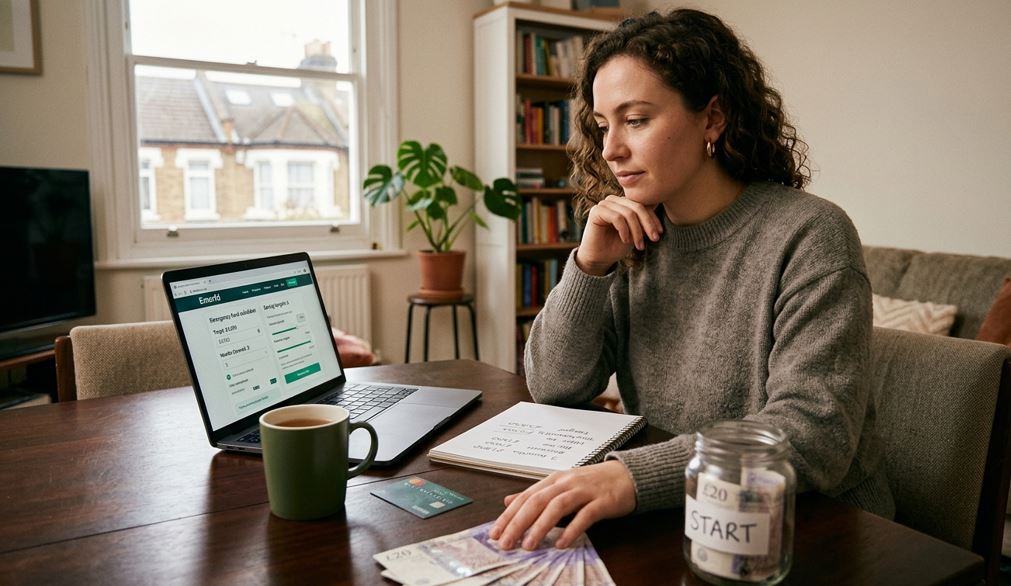
A good emergency fund for a single person in the UK should ideally cover 3 to 6 months of essential living expenses. Based on 2026 cost-of-living data, this typically ranges from £4,500 to £12,000, depending on your location and lifestyle.
While the “3-month rule” is a standard benchmark, single individuals often benefit from a larger cushion because they lack a secondary household income to rely on during a crisis.
1. The Starter Goal: £1,000 to £2,000
For those just beginning their journey, aim for a “mini” emergency fund of at least £1,000. This amount is designed to cover immediate, smaller-scale crises—such as urgent car repairs, a broken boiler, or an unexpected vet bill—without you having to resort to high-interest credit cards.
2. The Standard Goal: 3 Months of Essentials (£4,500+)
This level provides a safety net against temporary income loss. To calculate your specific target, use an emergency fund calculator to total your “must-pay” monthly costs, including:
-
Housing: Rent or mortgage payments and Council Tax.
-
Utilities: Energy bills, water, and essential broadband.
-
Living: Groceries and basic transportation.
3. The Security Goal: 6 Months of Essentials (£9,000+)
Financial experts recommend a 6-month buffer for single people in 2026, especially if you are self-employed, work in a volatile industry, or have high fixed costs. Having this larger cash reserve ensures that even a prolonged period of unemployment doesn’t lead to debt.
Where to Keep Your Savings
To maximize your money, keep your funds in a high-yield, instant-access savings account. In 2026, many UK savers are achieving rates of 4.15% to 4.5% AER, allowing the fund to grow while remaining available the moment an emergency strikes.
Pro Tip: Treat your emergency savings as a non-negotiable monthly “bill.” Automating a standing order for the day after you get paid is the most effective way to reach your goal without feeling the pinch.